

Japanese Baseball Jerseys: Why NPB and Koshien Jerseys Are the Most Underrated Pieces in Sportswear
If you've spent any time in Japanese baseball culture, you already know that Japan's obsession with detail is on another level. It's stitched into the country's baseball uniforms too. Nippon Professional Baseball (NPB) jerseys embody the same precision, restraint, and manufacturing pride that define everything from a Skyline dashboard to a vintage Toyota staff jacket — and yet, outside of Japan, they remain among the most overlooked categories in collectible sportswear.
That's starting to change. As streetwear collectors branch out from sneakers and jackets into vintage sportswear, and as JDM fans look for pieces that carry real cultural weight, Japanese baseball jerseys are quietly becoming one of the most interesting corners of the hobby. This guide breaks down all 12 NPB teams, what makes each team's jerseys distinct, the role of Koshien in jersey culture, and — most importantly — how to tell an authentic piece from a reproduction before you buy.
A Brief History of NPB and Its Jersey Culture
Nippon Professional Baseball dates back to 1950, when the league split into the Central League and Pacific League — a structure that's remained largely intact ever since. What sets NPB apart from MLB, historically, is how closely teams are tied to their corporate parents. Franchises like SoftBank, Rakuten, and DeNA aren't just sponsors; they're often the team's namesake and identity, and that relationship has shaped jersey design and branding for decades.
This corporate closeness is part of why NPB jerseys feel different from their American counterparts. A jersey isn't just a team's colors — it's a snapshot of a specific era of sponsorship, a specific decade, sometimes even a specific marketing campaign. That's a big part of what makes them collectible.
Among vintage collectors, jerseys from the 1980s and 1990s are widely considered the high-water mark. Brands like Descente, Mizuno, and Asics produced official kits during this period, and the construction — heavyweight mesh, embroidered lettering, full-button fronts — is a level of quality that many collectors feel modern replica jerseys simply don't match.
The 12 NPB Teams and Their Jerseys
Hiroshima Toyo Carp
For many jersey collectors, the Carp are where the obsession starts. The bold red-and-white colorway is instantly recognizable, and Hiroshima's working-class identity gives the brand an authenticity that resonates well beyond Japan. Vintage Mizuno-era Carp jerseys from the 1980s are especially prized on the secondary market, and it's easy to see why — the color, the cut, and the story behind the team all line up.
Chunichi Dragons
Based in Nagoya, the Dragons built their identity around a navy-and-white palette, but it's their alternate designs that really stand out to collectors. The Shoryu ("Dragon") special editions, released in 2019 and 2020, are a good example — dragon-inspired graphics layered over a modern athletic cut, blending traditional Japanese motifs with contemporary sportswear design. A piece like the Chunichi Dragons 2019 Campaign Fan Club Shoryu Jersey in classic navy, or the 2023 Chunichi Rising Dragons 昇竜ユニホーム Shoryu Jersey, shows how far NPB teams have pushed limited-run design in just the past few years.
Fukuoka SoftBank Hawks
The Hawks are one of NPB's most successful modern franchises, and their jersey program reflects that ambition with frequent anniversary and special-edition runs. The 75th Anniversary Purple kit, for example, was produced in limited numbers and rarely makes it outside Japan through official channels. Earlier pieces, like a Retro Majestic SoftBank Hawks Jersey from the team's Majestic partnership era, offer a different flavor — a reminder that even "modern" NPB jerseys have their own layered manufacturing history.
Tokyo Yomiuri Giants
If NPB has a Yankees equivalent, it's the Giants. Japan's most storied franchise wears an orange-and-black colorway that's been a fixture of Japanese baseball culture for generations. Genuine Adidas-produced Giants kits — from the brand's official NPB partnership — are increasingly difficult to source, which makes an authentic piece like a Genuine Adidas NPB Yomiuri Giants Visitor Jersey a meaningful addition for anyone serious about the category, rather than just a replica bought for the logo.
Hokkaido Nippon-Ham Fighters
The Fighters are best known internationally as the team that developed Shohei Ohtani before his move to MLB. Anything connected to that era of his career tends to carry outsized collector value, and authenticated pieces from that window are genuinely hard to find. A signed item — like an Autographed Shohei Ohtani Nippon Ham Fighters Baseball + Bonus Jersey — represents a different tier of collecting altogether, closer to sports memorabilia than streetwear.
Hanshin Tigers
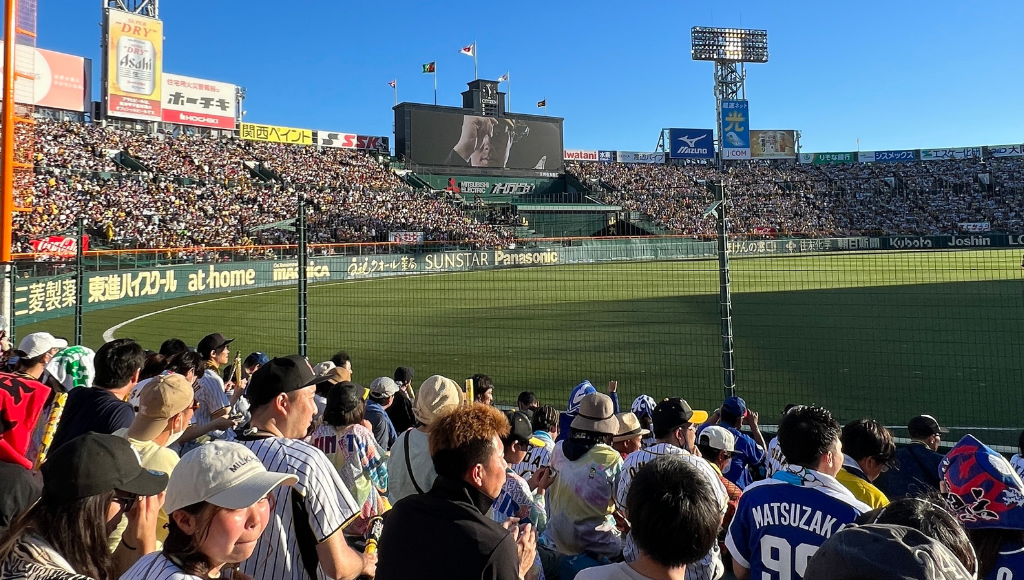
Based in Nishinomiya and playing out of Koshien Stadium, the Hanshin Tigers were founded on December 10, 1935, as the Osaka Tigers, making them the second-oldest professional baseball franchise in Japan. Their tiger-striped black-and-yellow uniform is one of the most recognizable in NPB, and their rivalry with the Yomiuri Giants — dating back to the league's founding year — is widely regarded as Japanese baseball's defining rivalry. The team adopted its current name in 1961, reflecting its home in Nishinomiya rather than Osaka proper. For collectors, that near-90-year history means Tigers jerseys span an unusually wide range of eras, from prewar Osaka Tigers pieces through the modern stripe design that's stayed remarkably consistent since the 1961 rebrand.
Yokohama DeNA BayStars
The BayStars trace their roots to 1950, when they entered NPB as the Taiyo Whales, a team affiliated with a fishing company. The franchise moved and rebranded several times over the decades — through the Taiyo Whales, Yokohama Taiyo Whales, and Yokohama BayStars eras — before mobile and e-commerce company DeNA acquired the club in December 2011, with the current Yokohama DeNA BayStars name taking effect for the 2012 season. That layered corporate history makes the team's jerseys a genuinely interesting timeline piece: a single franchise lineage that runs from a whaling company's team crest to a modern tech-brand uniform.
Tokyo Yakult Swallows
Playing out of Meiji Jingu Stadium in Tokyo, the Swallows were founded in 1950 as the Kokutetsu Swallows, then owned by Japan's national railway. Ownership passed to the Sankei Shimbun newspaper in 1965 before Yakult Honsha, the probiotic drink company, purchased the team in 1970 — the franchise has carried the Yakult name in some form ever since, becoming the Tokyo Yakult Swallows in 2006. The team's green colorway and swallow emblem have remained constant through those ownership changes, giving Swallows jerseys a clean, legible identity even for collectors who aren't deeply familiar with the team's backstory.
Saitama Seibu Lions
Now based in Tokorozawa, Saitama, the Lions began as the Nishitetsu Lions in Fukuoka, where they were among NPB's most dominant teams throughout the 1950s. The franchise moved to the Tokyo area in the late 1970s after being purchased and merged into the Prince Hotels group, becoming the Seibu Lions under Seibu Railway's ownership. "Saitama" was added to the team name in 2008, the same year the club also won the Pacific League pennant and Japan Series. Because of that Fukuoka-to-Saitama move, older Nishitetsu and early Seibu-era jerseys represent a genuinely different regional chapter of the franchise, distinct from the modern Saitama-based identity.
Tohoku Rakuten Golden Eagles
The Golden Eagles are NPB's newest franchise, formed in November 2004 and based in Sendai, Miyagi Prefecture. The team was created specifically to fill the gap left when the Osaka Kintetsu Buffaloes and Orix BlueWave merged into a single club, a restructuring that triggered NPB's first-ever players' strike. Owned by e-commerce company Rakuten, the Golden Eagles played their first season in 2005. Because the franchise is barely two decades old, its jersey history is short and clearly documented compared to older teams — which appeals to collectors who want a complete, catalogable run rather than chasing down obscure prewar variants.
Chiba Lotte Marines
The Marines' lineage dates back to 1950, when they entered the league as the Mainichi Orions and won the inaugural Japan Series. The franchise changed names and cities repeatedly over the following decades — playing in Tokyo, Sendai, and Kawasaki under various ownership arrangements — before confectionery company Lotte took over in 1969 and the team finally settled in Chiba in 1992, adopting the Chiba Lotte Marines name still in use today. That well-documented migration gives Marines collectors a clear, if winding, path to trace: Orions-era pieces represent an entirely different visual identity from the modern Marines branding.
Orix Buffaloes
The current Orix Buffaloes were formed in 2005 through the merger of two Pacific League teams: the Osaka Kintetsu Buffaloes and the Orix BlueWave of Kobe. The franchise splits home games between Kyocera Dome Osaka and Kobe's Hotto Motto Field, reflecting that dual heritage. Because the merger dissolved two separate, established franchises into one, jerseys from either predecessor team — the Kintetsu Buffaloes or the Orix BlueWave — are treated by collectors as a distinct earlier era rather than simply "old Orix" pieces, and each carries its own separate collector following.
Koshien: High School Baseball's Jersey Legacy
No conversation about Japanese baseball jerseys is complete without Koshien — the national high school baseball tournament held at Hanshin Koshien Stadium in Hyogo Prefecture. Koshien occupies a cultural space in Japan that's hard to overstate; for many fans, it carries as much emotional weight as the professional league itself, if not more.
Jerseys from Koshien competitors are some of the rarest pieces in the entire category. Each school designs and produces its own uniform, often worn for a single tournament run, which means surviving examples are essentially one-of-a-kind artifacts rather than mass-produced merchandise. A piece like the Vintage Mizuno Koshien — Hyogo Aboshi High School jersey or the Vintage Koshien — Kagawa Zentsūji Daiichi High School jersey isn't a reproduction — it's an original, team-issued garment from a school that competed on that stage.
For collectors who already own the major NPB team jerseys, a Koshien piece is often the next logical step: something rarer, more personal, and harder to explain to someone who doesn't already know the culture.
What to Look for When Buying an Authentic NPB Jersey
The vintage Japanese baseball jersey market has no shortage of reproductions, so it pays to know what separates an authentic piece from an imitation.
Brand Tags and Labels
Authentic vintage NPB jerseys typically carry tags from recognized manufacturers — Descente, Mizuno, Asics, or Majestic — rather than generic or unbranded labels. Japanese-language care labels are another good sign; a jersey genuinely produced and sold in Japan will usually have them.
Construction
Genuine jerseys generally use embroidered or tackle-twill lettering, not heat-pressed graphics. Stitching should be dense, even, and consistent across the garment — sloppy or uneven stitching is one of the first things worth checking.
Sizing
Japanese sizing tends to run smaller than U.S. equivalents — an authentic Japanese "L" often fits closer to a U.S. medium. Rather than trusting the tag size alone, it's worth checking actual chest and length measurements before buying, especially when shopping internationally.
Provenance
The strongest pieces in any collection tend to come with a documented history — purchased directly in Japan, sourced from a team store, or passed through a verified collector. Provenance won't always be available, but when it is, it adds real value and confidence.
Why the 1980s–2000s Represent the Sweet Spot
Modern NPB jerseys are well-made, but many collectors consider the period from roughly 1980 through the early 2000s the peak of Japanese baseball jersey craftsmanship. This was the stretch when Descente and Mizuno held major NPB manufacturing contracts, producing heavyweight mesh jerseys with full embroidery and team-specific detailing that today's sublimated, print-based jerseys don't really attempt to replicate.
A piece like the Vintage Descente Toyota Matsuhidai Baseball Jersey — 1980s Green Pinstripe captures that era well: a corporate-sponsored team jersey with pinstripe detailing and period-correct Descente construction, the kind of garment you're unlikely to come across through typical retail channels.
Building a Japanese Baseball Jersey Collection
For anyone starting out, a simple framework helps:
- Anchor with a flagship team. Carp, Giants, or Dragons jerseys are the most recognizable within the hobby and tend to hold their value well over time.
- Add a Koshien piece. High school jerseys are the rarest category in the space and, for a lot of collectors, the most conversation-worthy pieces they own.
- Look for special editions. Anniversary kits, alternate colorways, and corporate-era jerseys (Dorifters, Hawks 75th, and similar) are often the pieces that appreciate the most over time.
- Prioritize condition and authenticity over polish. A well-preserved authentic jersey — even with honest wear — is generally worth more, both in resale value and in story, than a flawless reproduction.
This is also where Japanese baseball jerseys connect back to broader JDM and vintage sportswear culture. The same instincts that draw people to a well-preserved staff jacket or a corporate racing coverall — provenance, era-correct construction, a real story behind the garment — apply here as well. It's not a stretch to build a wardrobe or a collection that moves between vintage Japanese sportswear and NPB jerseys, since both categories reward the same kind of attention to detail.
Browse Sugoi JDM's Japanese Baseball Jersey Collection
Every jersey in our collection is individually sourced and verified before it reaches our store — from flagship NPB team pieces to rare Koshien finds. If you're building a collection or just want a genuine piece of Japanese sportswear history in your rotation, our Team Sports collection is worth a slow browse rather than a quick scroll. New pieces move quickly, especially vintage Descente and Mizuno-era jerseys, so it's worth checking back often if a specific team or era is on your list.
Frequently Asked Questions
What is an NPB jersey?
NPB stands for Nippon Professional Baseball, Japan's top professional baseball league. An NPB jersey is an official team uniform produced for one of the league's 12 teams, typically manufactured by brands such as Descente, Mizuno, Asics, or Majestic, depending on the era.
How can I tell if a Japanese baseball jersey is authentic?
Check for manufacturer tags from recognized brands, Japanese-language care labels, embroidered or tackle-twill lettering rather than heat-pressed graphics, and consistent, dense stitching. Documented provenance — such as purchase directly from Japan or a verified collector — adds further confidence.
Why do Japanese jerseys run smaller than U.S. sizes?
Japanese sizing standards generally run smaller than U.S. equivalents. As a rough guide, an authentic Japanese "L" often fits closer to a U.S. medium, so checking the garment's actual measurements rather than relying on the tag size is recommended.
What makes Koshien jerseys rare?
Koshien jerseys are produced individually by each competing high school for Japan's national tournament, often worn during a single tournament run. Because they aren't mass-produced, surviving examples are considered some of the rarest pieces in Japanese baseball jersey collecting.
Are vintage NPB jerseys a good investment?
Many collectors view well-preserved, authenticated vintage jerseys — particularly from the 1980s–2000s era — as pieces that tend to hold or grow in value over time, especially special editions and flagship team pieces. As with any collectible, value depends on condition, authenticity, and demand, so this shouldn't be treated as guaranteed.
Share:
Behind the Scenes in DTLA Arts District Shoot